Spreading pine straw is not difficult. Doing it so it still looks right in six months is where technique starts to matter — here is what actually separates the two.
Pine straw is not hard to spread. Anyone can buy rolls, break them open and cover a bed, and for a small garden that is a perfectly reasonable Saturday. It is worth being honest about that before explaining what a professional installation adds, because the difference is not effort — it is technique, and most of it is in the details that only show up later.
Depth is the part most people get wrong
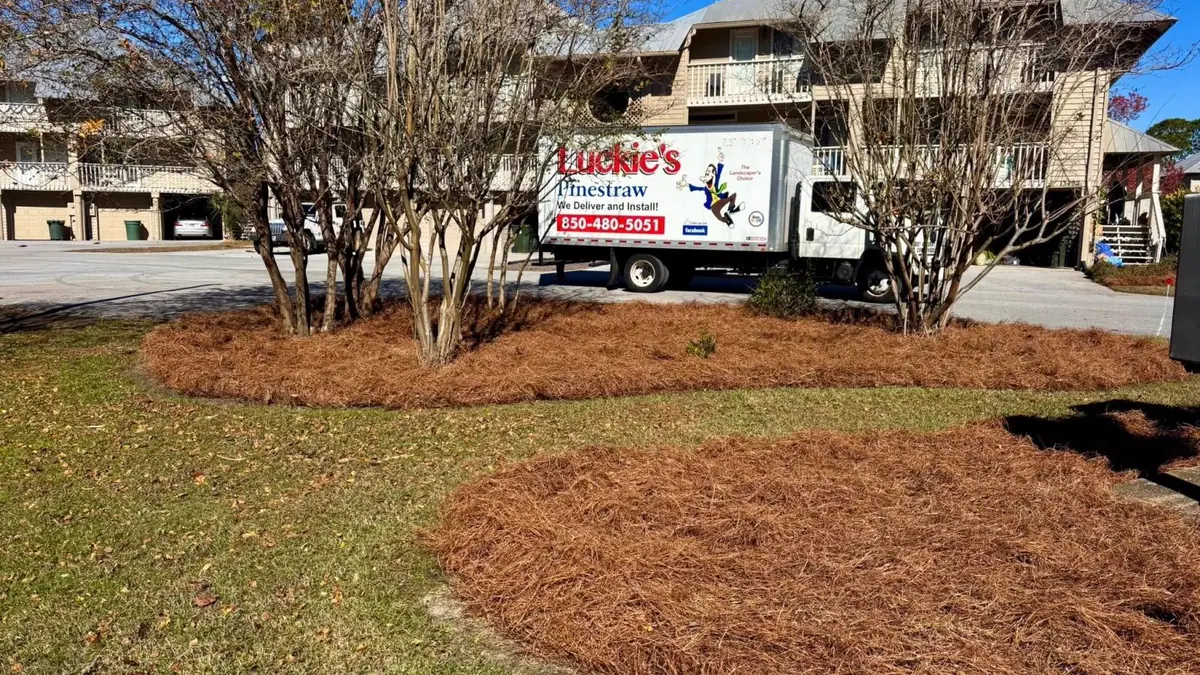
A bed wants two to three inches, consistently, across the whole area. Too thin and light reaches the soil, weeds come through and the straw breaks down within months. Too thick and water struggles to reach the roots, and the layer mats down instead of breathing.
The common DIY outcome is neither: thick where a roll was opened and thin at the margins, because straw is spread outward from where it landed. It looks fine on the day and uneven within a season.
The edges
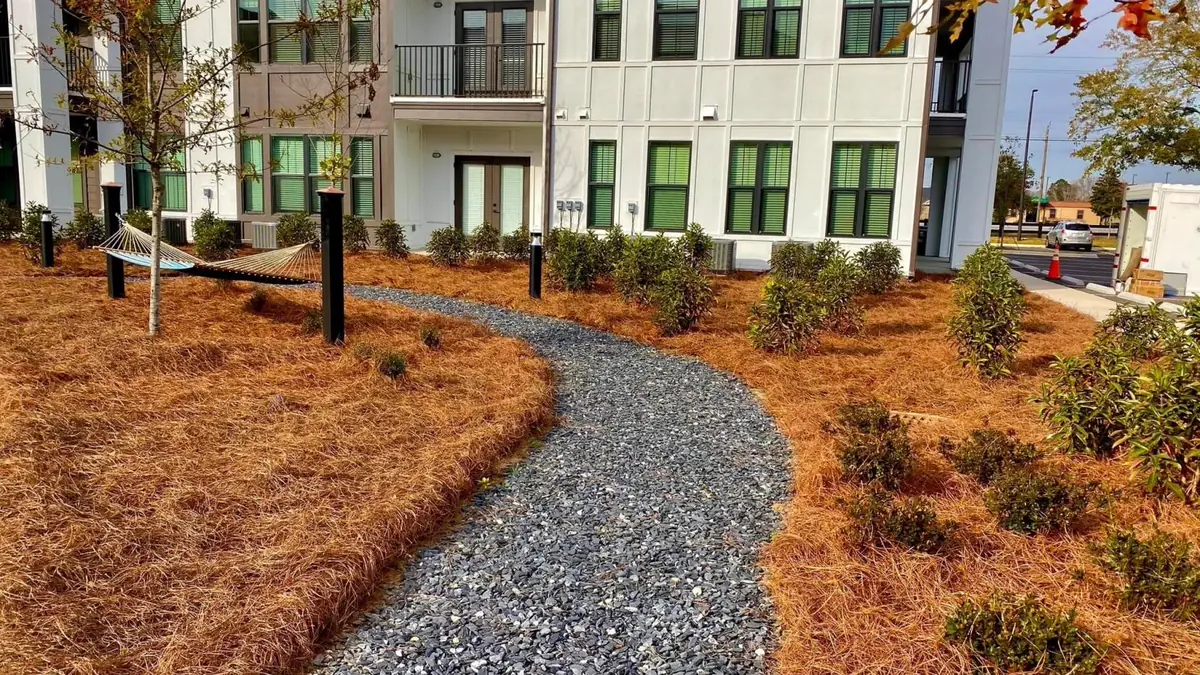
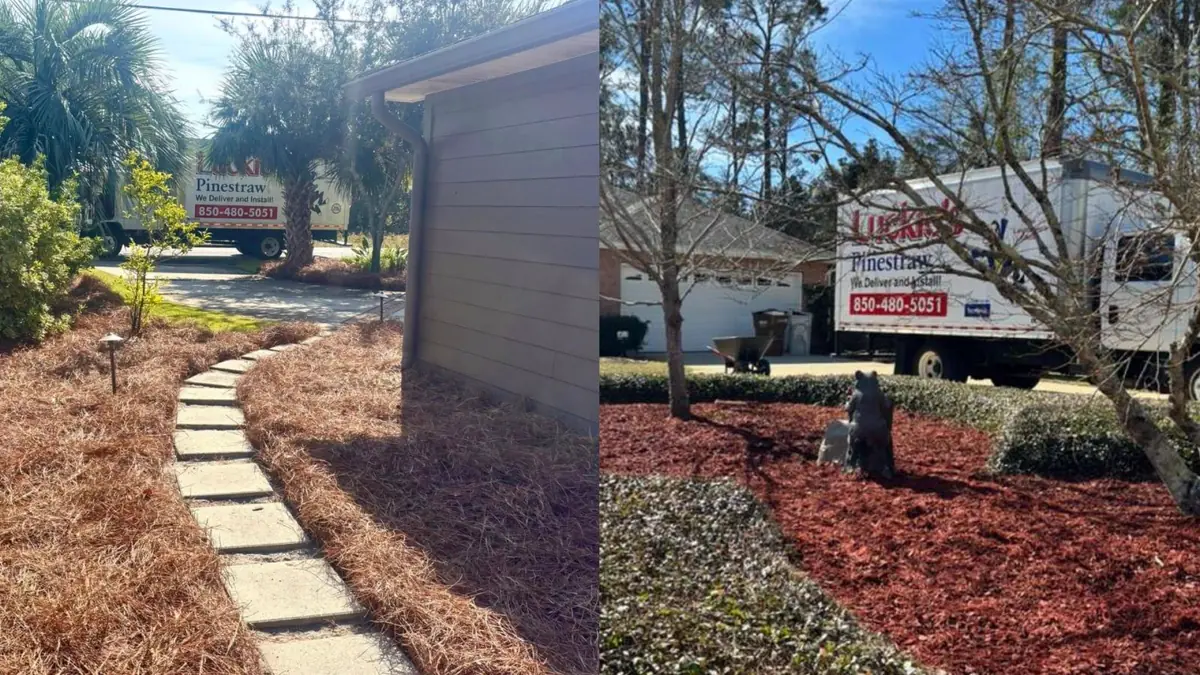
This is the single biggest visual difference, and it is what makes a professionally finished bed recognizable from the street. There are two ways to do it properly.
Trench and Tuck cuts a three-inch trench along the bed line with a landscaping spade and tucks the straw down into it. The result is a hard, straight edge that holds against a driveway or sidewalk and keeps straw from washing out in heavy rain. Curling uses a blower to roll the edge under itself, leaving a softer raised line and a defined bed without a cut trench.
Both take time and a feel for the tool. Without either, a bed simply stops where the straw ran out, which is the difference between a landscaped bed and a covered one.
The clean-up nobody thinks about
Every roll is bound with twine, and every piece of it has to come out. Buried twine surfaces months later, catches in mower blades and is unpleasant to deal with once it is tangled into a settled bed.
Straw also needs keeping off bushes, walls and tree trunks. Piled against a trunk it traps moisture where the bark should stay dry; heaped over the crown of a shrub it does the same. Clearing it back is finicky and easy to skip.
When DIY makes sense
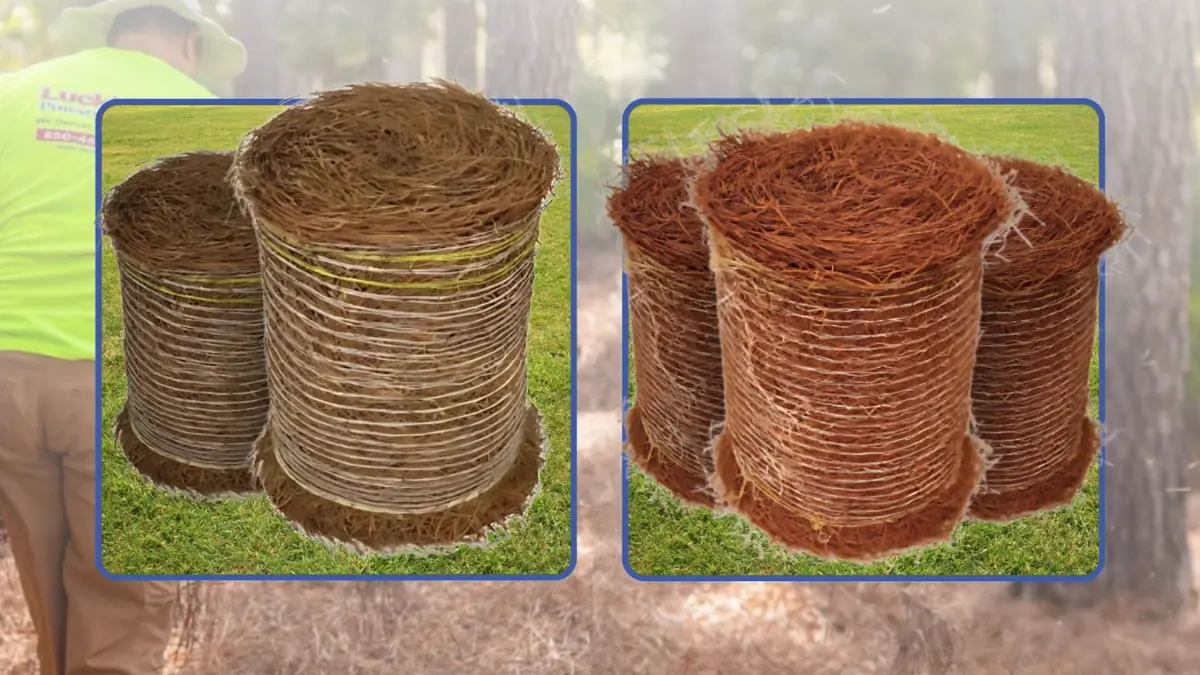
For one or two small beds, where you have the time and the straw is going down on flat ground, doing it yourself is entirely sensible — and we will happily deliver the rolls for you to spread. Longleaf rolls are $13.95 and each covers roughly 140 square feet, weighing 29 to 36 lbs, which is manageable to move by hand.
Where it stops making sense is scale and finish: large properties, sloped beds, anywhere the edges are on show, and any commercial or HOA site where the result has to look the same across the whole property. Installation is $10 per roll on top of the roll price, estimates are free, and bulk pricing applies to larger orders. Call 850-480-5051.
Get a Free Estimate
We serve Pensacola, Gulf Breeze, Pace, Cantonment, Navarre and Perdido. Tell us about your beds and we will price the material and the labor together.